About Para Toluenesulfonyl Chloride
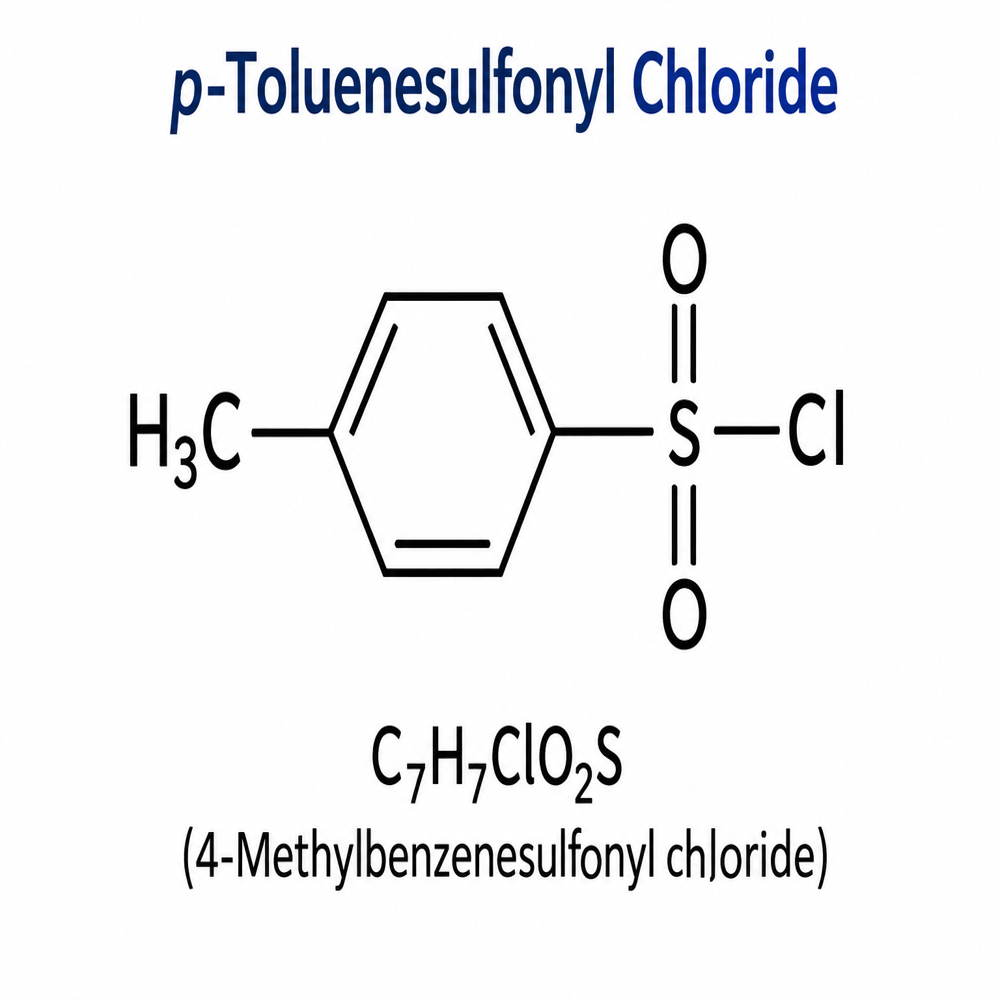
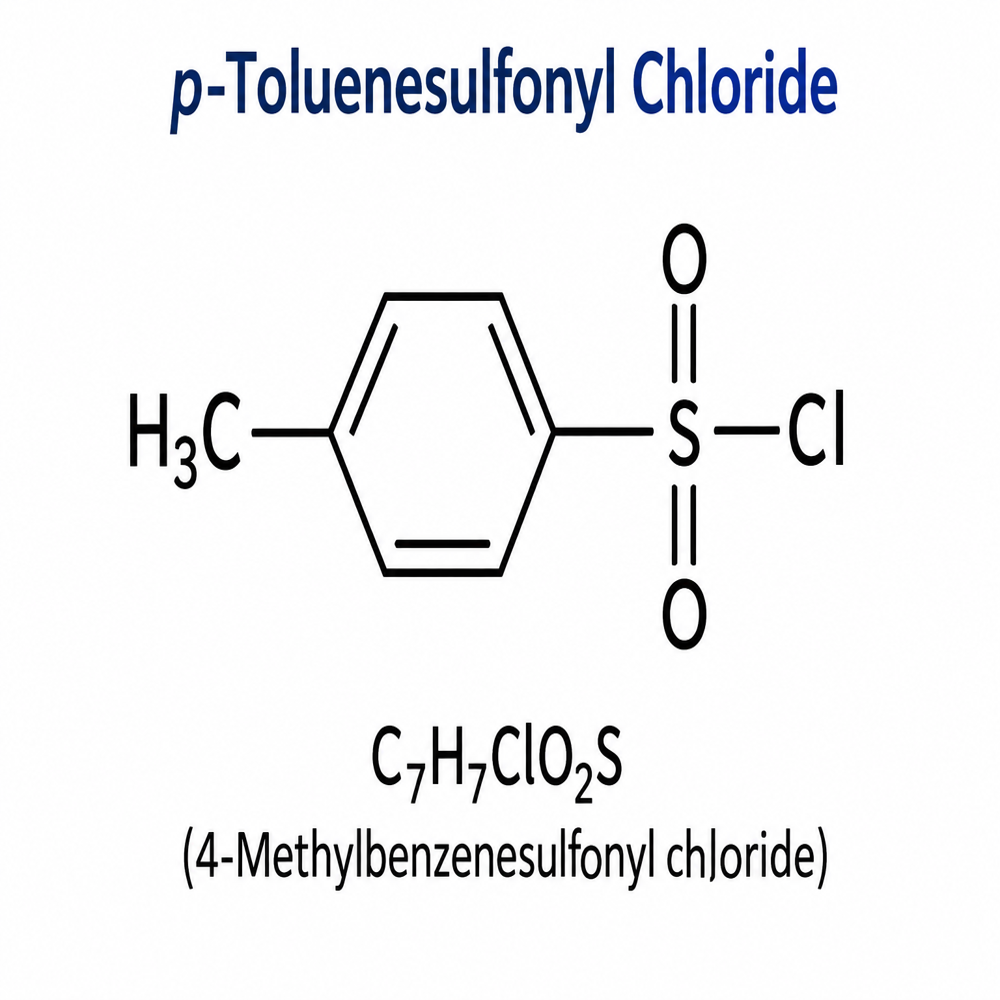
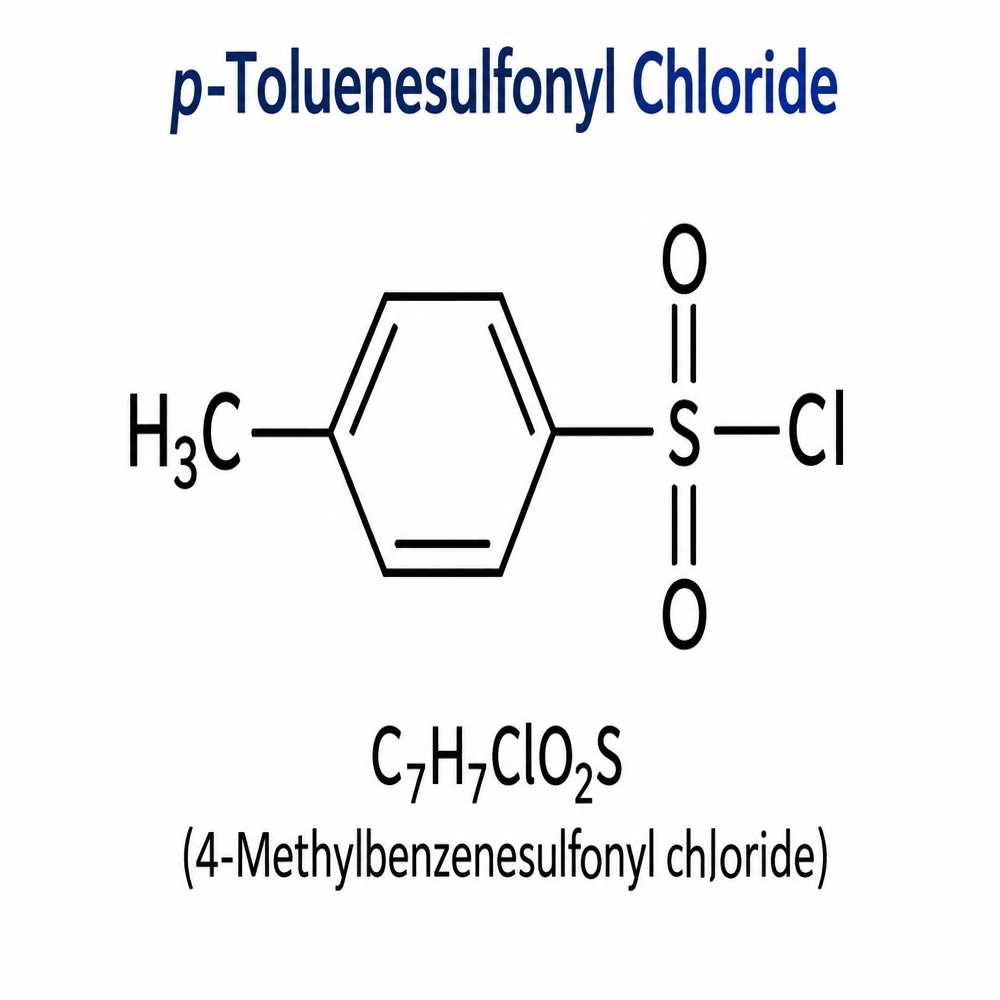
p-Toluene sulphonyl chloride, 98% Cas 98-59-9 - used in organic synthesis.T 1905 (OTTO) p-Toluene sulphonyl chloride, 98% Cas 98-59-9 - used as a precursor in the production of dyes and saccharin. It acts as a dehydrating agent in the conversion of urea to carbodiimide and converts alcohols into the corresponding toluenesulfonate esters. It is also employed as a flow-promoting agent for paints, an adhesive, nitrocellulose, coating material and as a plasticizer for polyamides.Key Physical and Chemical PropertiesPara Toluenesulfonyl Chloride is a solid with a molecular formula of C7H7ClO2S and a molecular weight of 190.65 g/mol. It is soluble in organic solvents such as chloroform, benzene, and ether, but insoluble in water. The compound is stable when stored in a cool, dry, well-ventilated area, tightly sealed to prevent hydrolysis. Melting point ranges from 68-70C, and it decomposes at higher temperatures during boiling.
Applications in IndustryThis compound serves as an important intermediate in pharmaceutical development, dye and pigment production, and organic synthesis. Its high purity and reactivity make it ideal for facilitating key chemical transformations. It is chosen for its reliability in creating sulfonyl derivatives and other complex molecules, contributing to advancements in medicinal and industrial chemistry.
Safe Storage and Handling RecommendationsPara Toluenesulfonyl Chloride requires careful storage away from moisture and incompatible substances to maintain stability. Containers should remain tightly sealed; open packages must be handled quickly and under controlled conditions. Always use protective gear due to its corrosive and reactive nature. Adhering to transport regulations (UN 3261, Class 8) is crucial for safety during transit.
FAQ's of Para Toluenesulfonyl Chloride:
Q: How should Para Toluenesulfonyl Chloride be stored to ensure maximum stability?
A: Store Para Toluenesulfonyl Chloride in a cool, dry, well-ventilated area with tightly closed containers to prevent contact with moisture. Avoid exposure to incompatible substances such as water and alcohols, which can cause violent reactions.
Q: What are the primary uses and benefits of Para Toluenesulfonyl Chloride?
A: Para Toluenesulfonyl Chloride is primarily used as a pharmaceutical intermediate, in dye and pigment production, and as an organic synthesis reagent. Its high purity and reactivity facilitate the efficient creation of sulfonyl derivatives and other complex compounds in various industries.
Q: When does the shelf life of Para Toluenesulfonyl Chloride expire?
A: The shelf life is two years if kept in its original, unopened packaging under recommended storage conditions.
Q: Where is Para Toluenesulfonyl Chloride typically sourced or manufactured?
A: It is commonly produced and supplied by chemical manufacturers in China and India, but it is also available globally through specialized exporters and suppliers.
Q: What precautions should be taken during handling and transportation?
A: Handling requires protective equipment due to its corrosive nature and pungent odor. Make sure containers are tightly closed, and follow transport regulations (UN 3261, Class 8) for corrosive substances. Avoid contact with water or alcohols to prevent hazardous reactions.
Q: How is Para Toluenesulfonyl Chloride used in organic synthesis processes?
A: In organic chemistry, it is used as a reagent to introduce the tosyl group, activating molecules for further transformations. Its reactivity supports efficient synthesis of pharmaceuticals, dyes, and other organic compounds.
Q: What packing options are available for Para Toluenesulfonyl Chloride?
A: It is typically supplied in 25 kg fiber drum or HDPE drum packaging, and custom packaging solutions are available upon request to meet specific industrial requirements.




 Send Inquiry


 Send Inquiry
 Send Inquiry
 Call Me Free


 English
 Spanish
 French
 German
 Italian
 Chinese (Simplified)
 Japanese
 Korean
 Arabic
 Portuguese
